Collaborators
with Innovation and User Experience teams from our client, Stacy Benjamin, Kelly Costello, and Dana Fell from Panorama Innovation.
Role
Intern for Panorama Innovation- Service Design and Design Research
To comply with our non-disclosure agreement, confidential information has been intentionally omitted or obscured in this case study. The views expressed here are my own, and are not necessarily held by our client or by Panorama Innovation LLC.
Imagine you are at your doctor’s clinic.
You go in for your appointment, the doctor examines you and prescribes a drug which seems to be the best course to take. The doctor’s office sends the prescription over to your preferred pharmacy, where you arrive to pick up the medicine. However, the pharmacist says that the prescription cannot be filled, and you will need to contact your doctor or health insurer to get what you need.
You leave the pharmacy- confused and worried, wanting to start treatment as soon as possible, but unable to because of reasons unknown to you.
delays
— American Medical Association
billion
— Casalino et al. 2009. Health Affairs.
According to a 2017 study from the American Medical Association, situations like these are responsible for 92% of delays in care, causing patients anxiety, and significantly increasing the burden on already overworked healthcare providers.
A 2009 study in the leading journal ‘Health Affairs’ found that hassles like these which healthcare providers have to undergo cost $23 to $31 billion every year in the United States.
Our client, a leading health insurance carrier, decided to tackle this problem to see what can be done. Our team at Panorama Innovation worked hand in hand with our client’s Innovation and UX teams on multi-pronged research processes, training and ideation workshops, prototype tests and all the way to project delivery.
My core responsibilities were conducting secondary research, mapping the process, refining it based on primary research, and creating prototypes.
I worked with the rest of the team to write discussion guides, conduct interviews, create presentations for design training and research immersion workshops. Also, I supported the facilitation of ideation and concept development sessions, refined concepts before and after feedback, and helped deliver the project.
The first step was learning as much as we could about the systems responsible for this problematic experience.
stakeholders
We conducted in-person and remote interviews of our client’s internal stakeholders from the business, technical, and marketing sides of the organization to get a better understanding of their structure and their roles in the overall system.
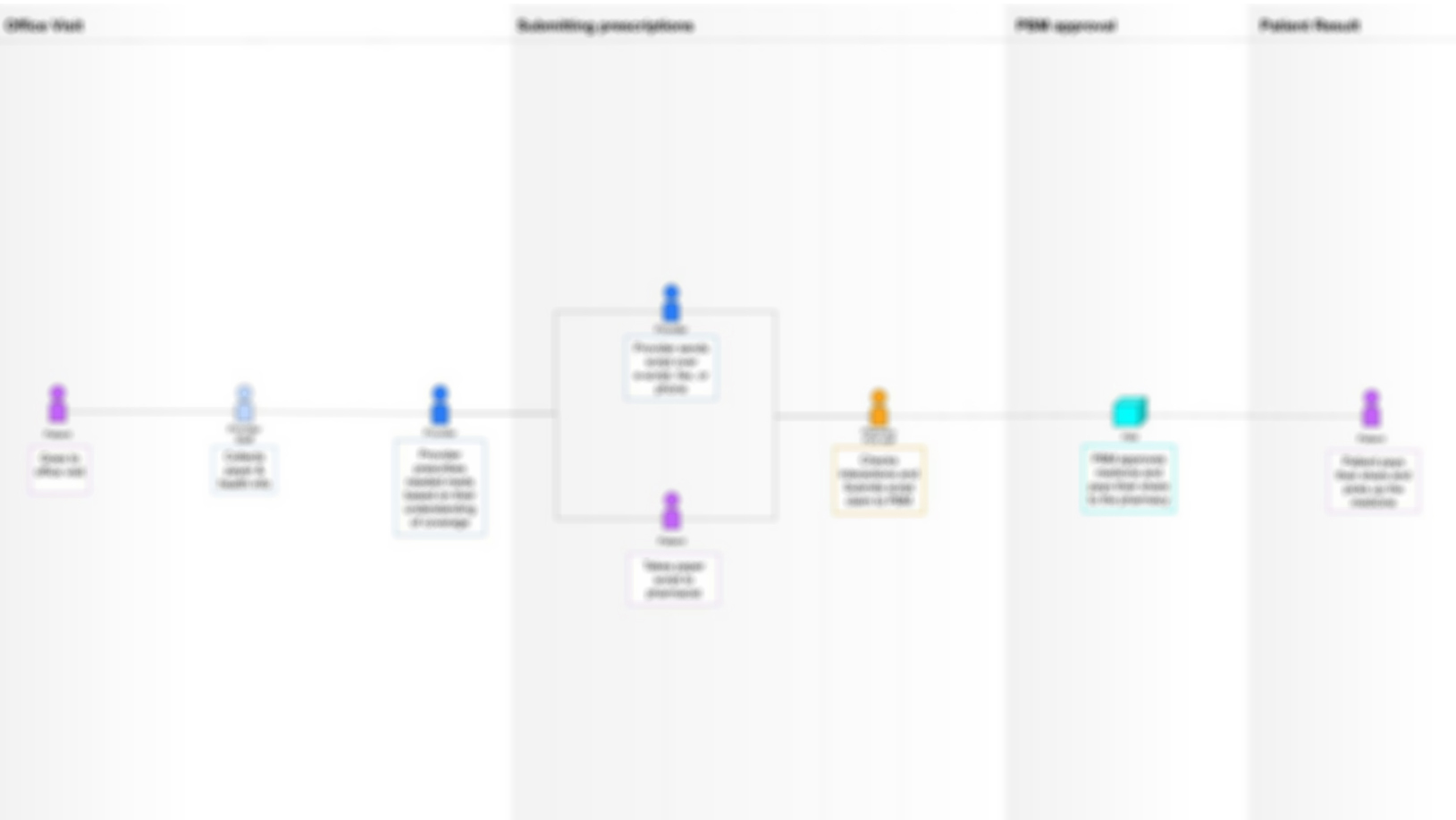
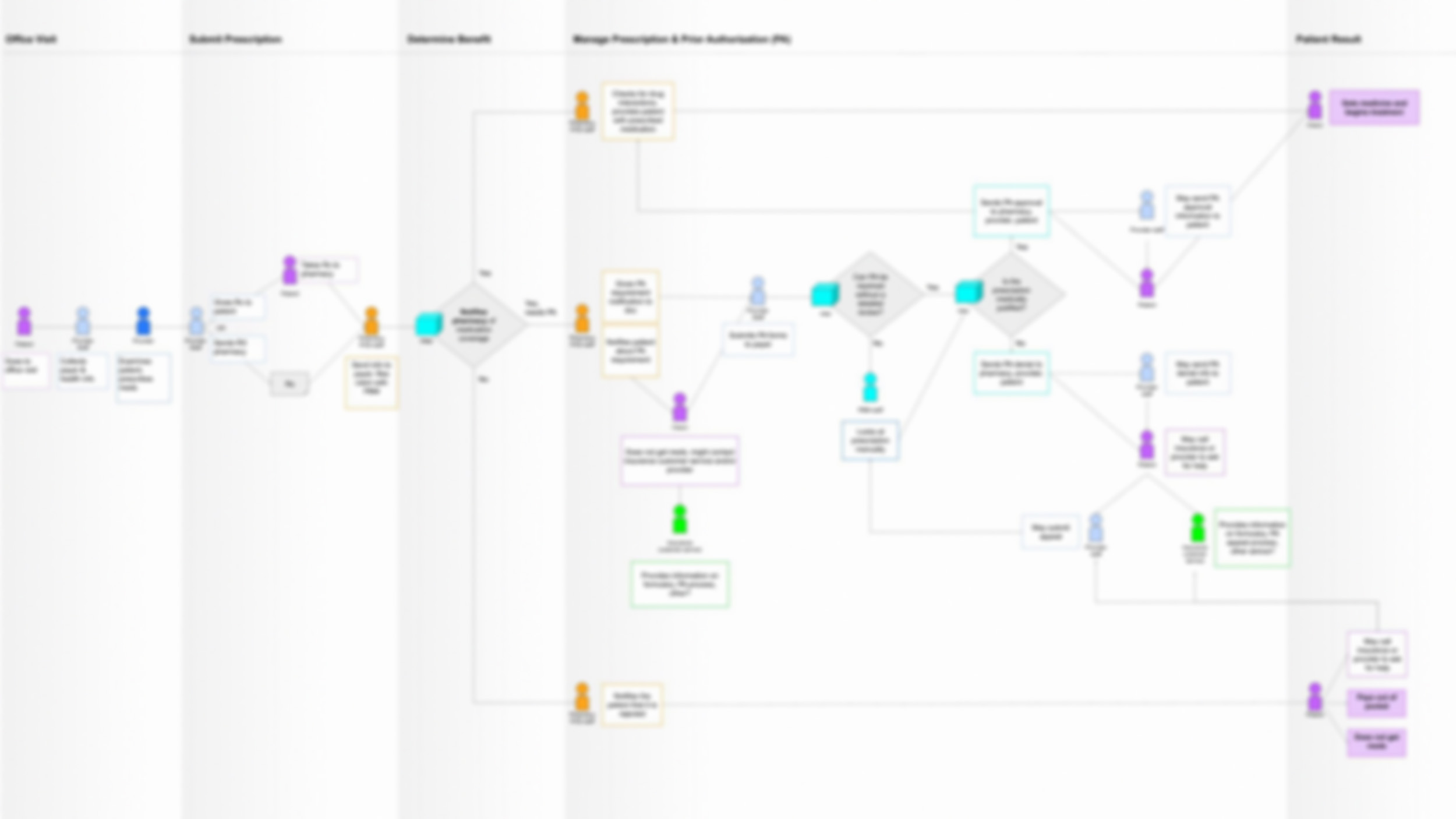
For desk research, I put together a spreadsheet with news articles, government policies, statistical data, blog posts, and journal articles from the internet, to which other team members contributed as well during the course of our sprint. A process map was started to visualize the information we obtained from all these sources.
healthcare
providers
Next, we interviewed healthcare providers and pharmacists about their experiences with health insurers, what their workflows were like, and tools they used as part of their practice. We realized from these interviews that the experience which patients have to go through was actually a lot more complex than we had previously thought it was.
.jpg)
participants
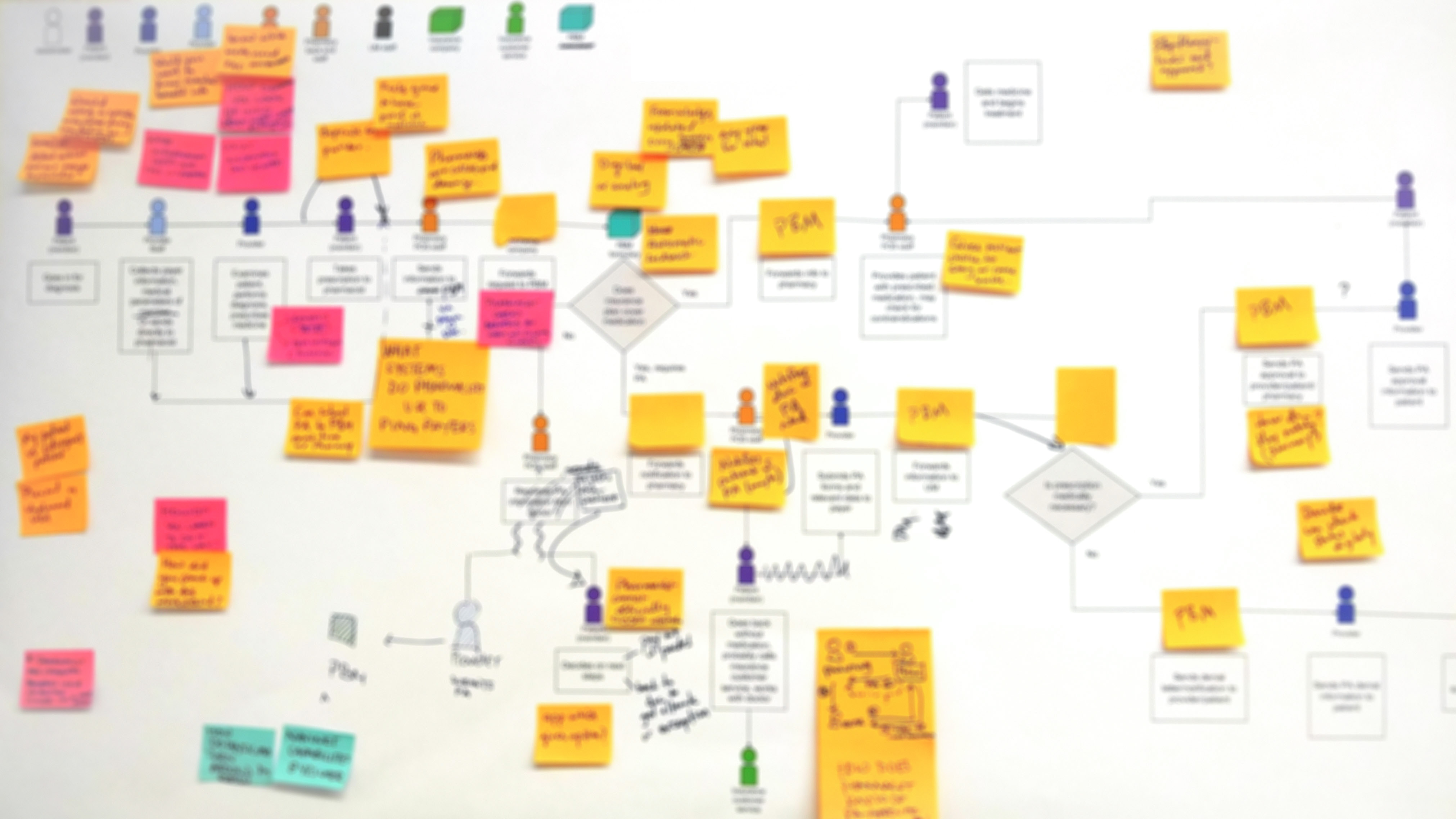
A two-day ideation workshop gave us a number of compelling ideas and prototypes which addressed our key challenges. 22 participants from our client's business, marketing, and technical sides came together for a two-day session to solve problems.
Techniques like process maps and concept cards were used to help participants internalize our research, after which we took them through different ideation and concept development exercises.
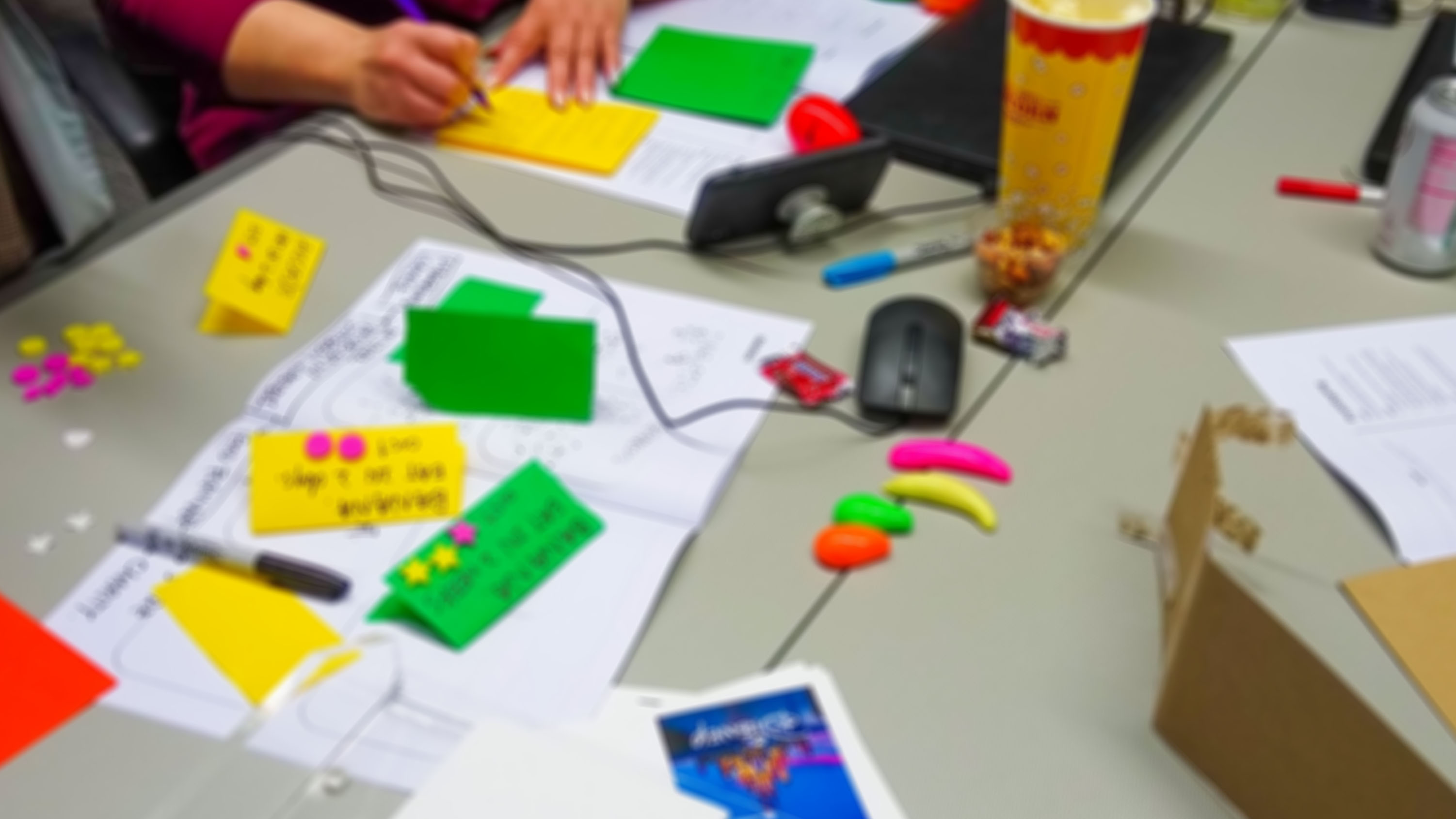
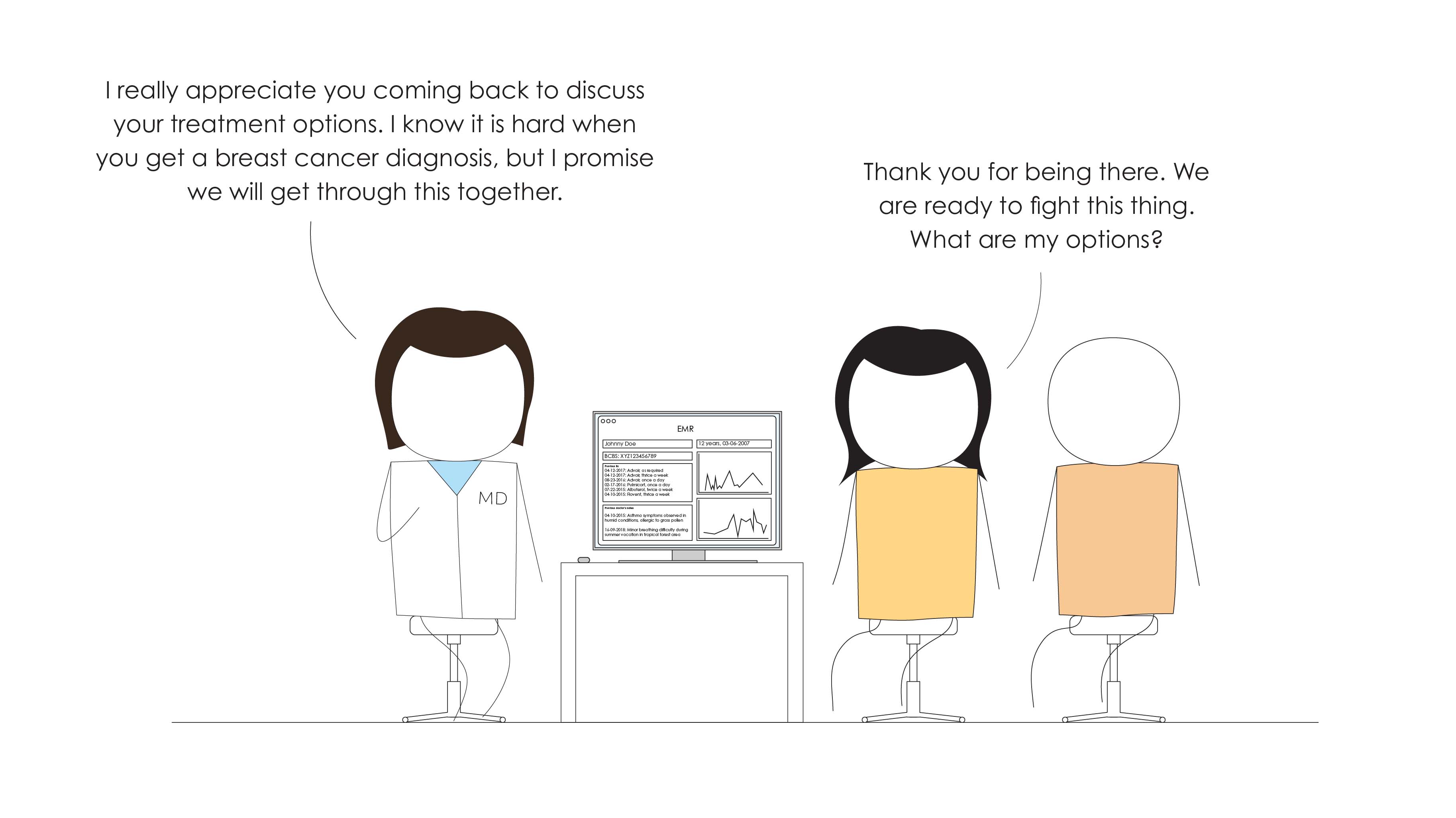
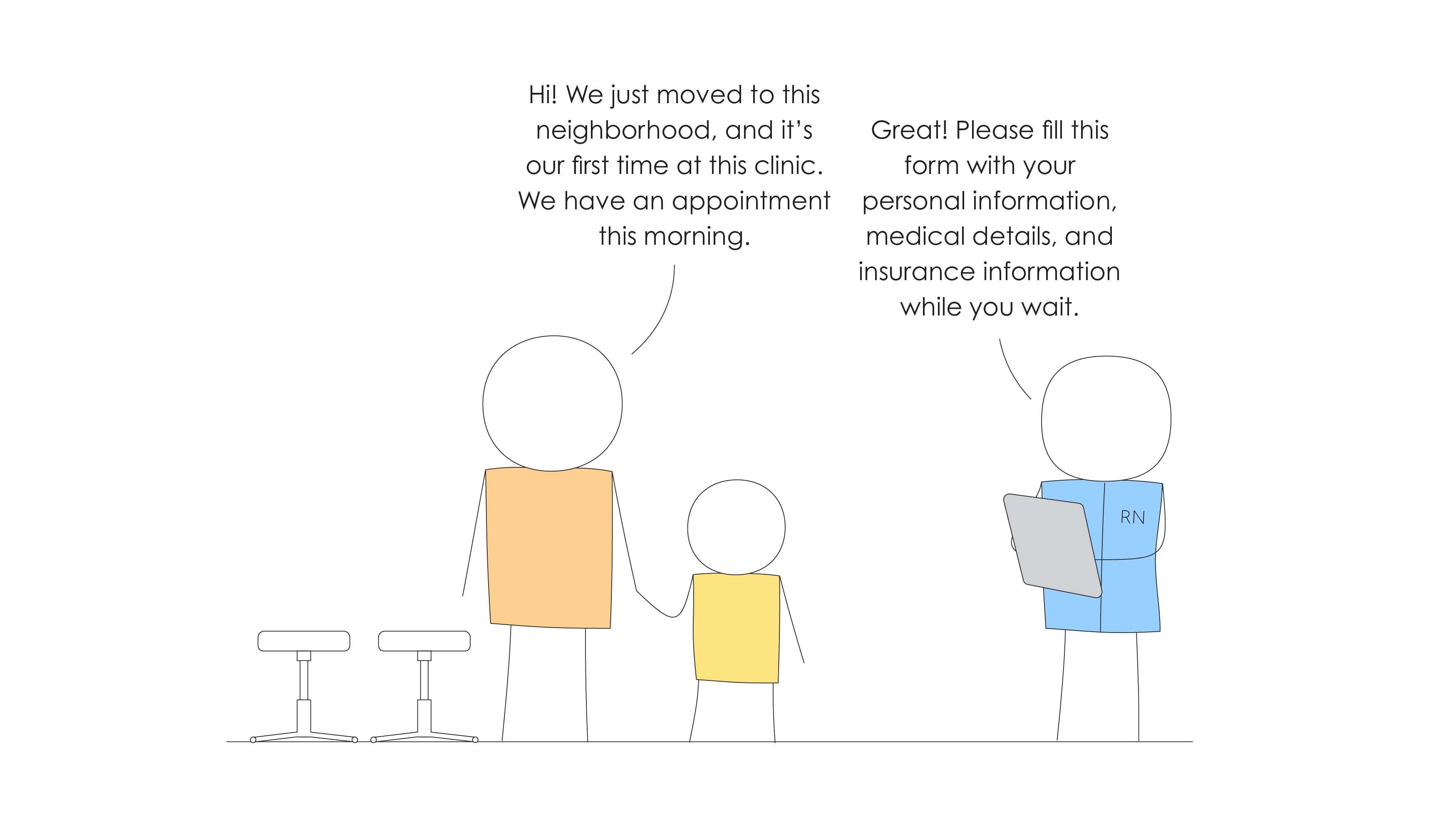
Each of the concepts was taken apart and critically evaluated based on ethics and human centeredness. Storyboards were created to show use cases of how patients and providers would benefit from our solutions. We compiled stories which showed how all concepts might work seamlessly with one other, and also independently if need be.
feedback
interviews
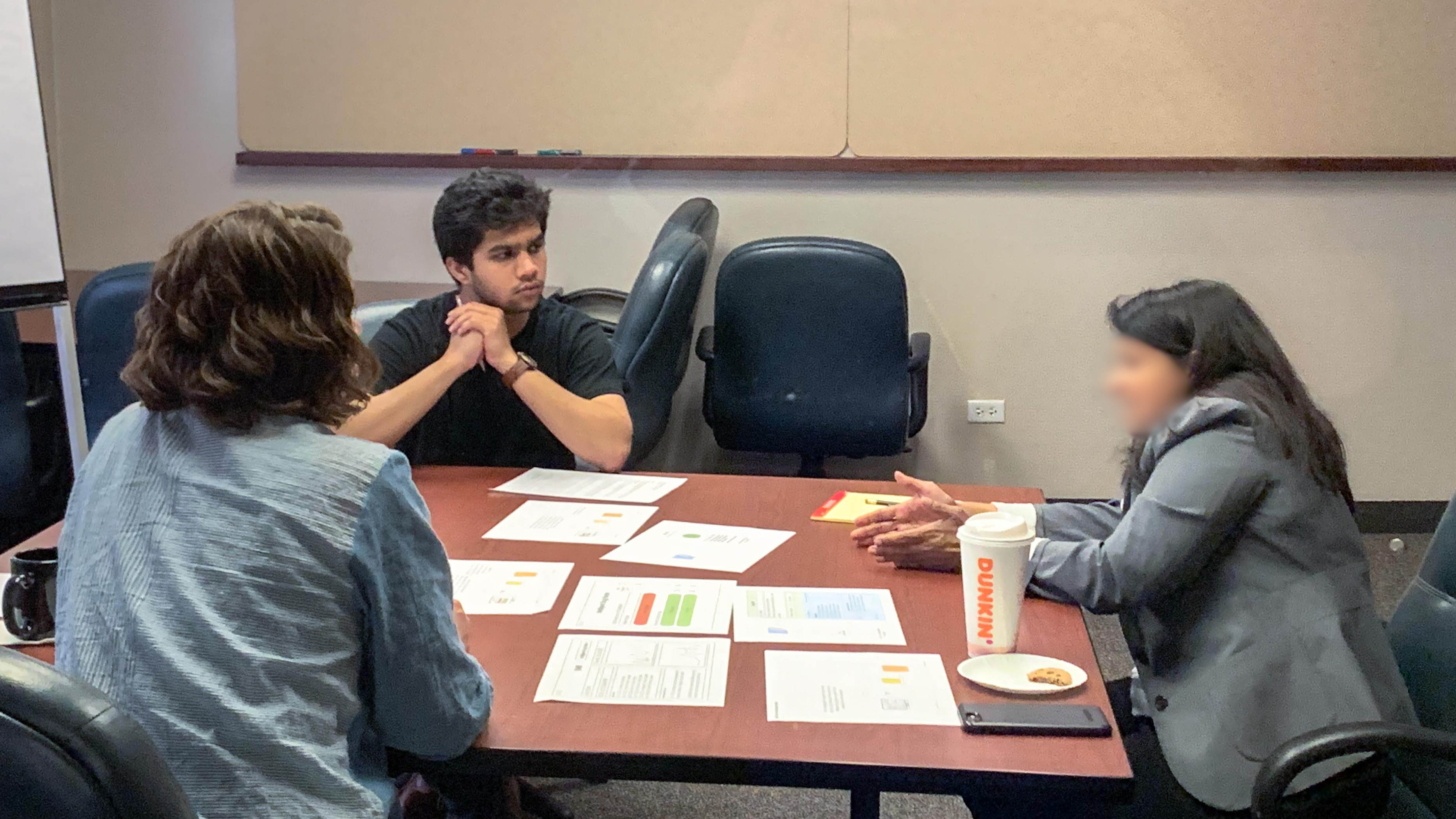
We interviewed 8 healthcare professionals and 6 members of our client's internal teams were to understand how these solutions might fit into their workflows.
Healthcare providers and other stakeholders gave us feedback on the effect these solutions would have on their work, after which we re-refined our concepts to better align with commonalities between our interviewees' individual workflows and our client's business goals.
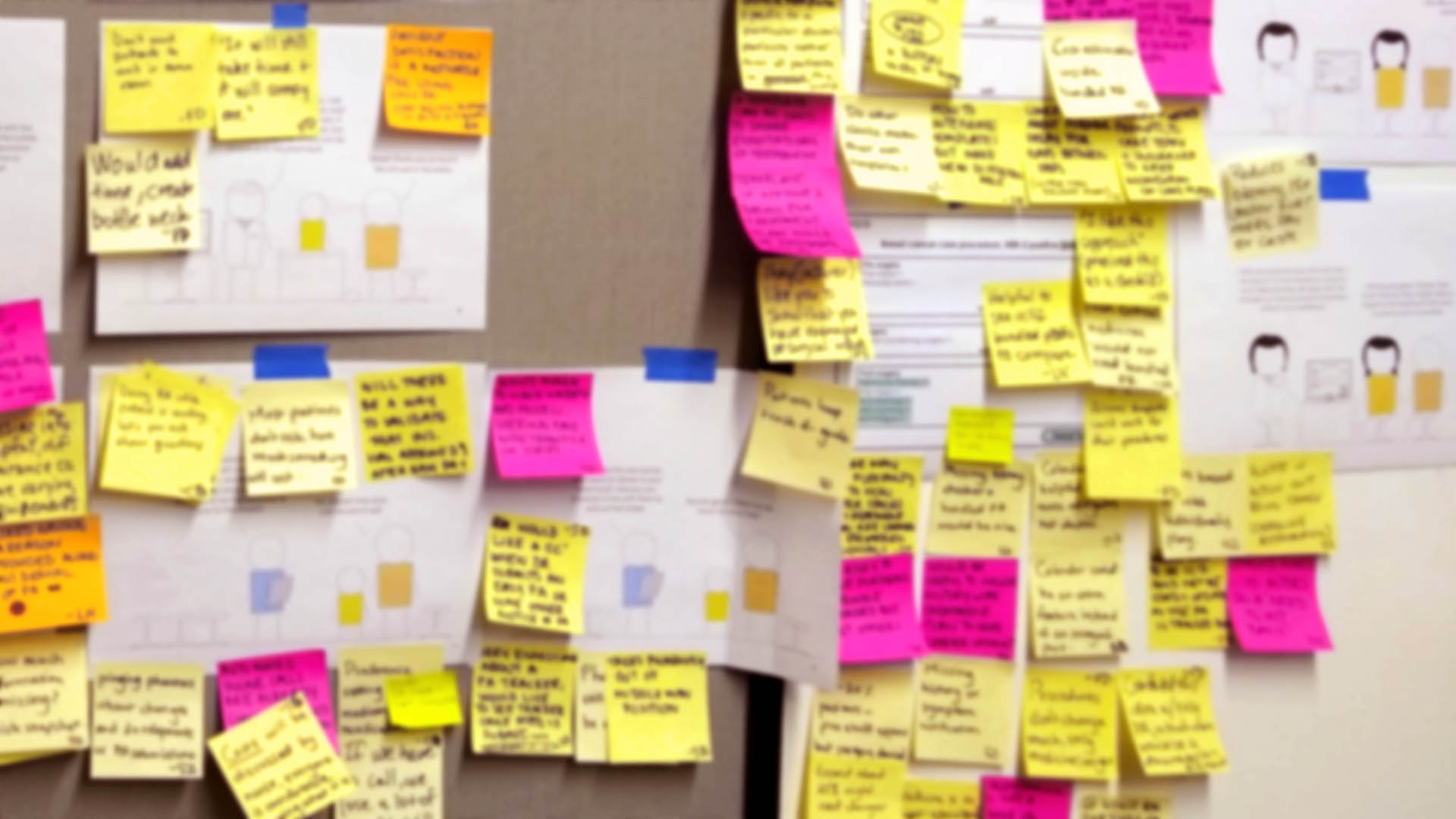
The solutions were presented to the internal teams at our client's company, and the project was delivered in the form of a report and guidelines on next steps to help them continue the work internally.
• Client side teams often work in silos and very few people really understand how the overall system works in large corporations.
• People are hesitant at first to start prototyping but can have a lot of fun and enjoy the process if given the right push.
• The design thinking vagueness is difficult for most non designers to accept, but striving to build trust throughout the workshop is very rewarding at the end.
• Innovation is most commonly associated with technology, and leveraging research to help people understand other people's lives and empathize with users is a great way to break this pattern.